









Fit a roof-mounted solar array if you move often and want charging that happens with no setup, including while towing. Use a portable panel or solar blanket if your camps are shaded, your roof is full, or you will not drill the roof. Most Australian tourers run both: a fixed array for baseline charging and one portable panel for shade and top-ups.
KEY TAKEAWAYS
- 1. Roof-mounted panels charge automatically and while driving. They cannot be moved out of shade.
- 2. Portable panels and solar blankets can be aimed at the sun, but must be set up, packed away and watched.
- 3. Caravan and RV electrical work is governed by AS/NZS 3001.2:2022, not the household rooftop solar standard AS/NZS 5033.
- 4. An MPPT controller recovers about 19 per cent more than PWM at 25 degrees cell temperature, and much less when panels are hot.
- 5. Size the array from daily amp-hours and local peak sun hours. One 215W panel yields roughly 60 Ah a day at 4.5 peak sun hours.
- 6. Every charging source needs exactly one regulator and its own circuit protection on the battery side.
Choose roof-mounted for automatic baseline charging, portable for shade and flexibility, and both if you travel regularly across mixed sites. Match your situation to the table below.
| Your situation | Best setup | Why |
|---|---|---|
| You move every day or two | Roof-mounted array | Charges while towing and needs no setup at all |
| Your usual camps are shaded | Portable panel or blanket | Goes into the sun while the van stays cool in shade |
| Roof is full of hatches and aircon | Portable panel | Adds capacity without needing roof space |
| You will not drill the roof | Bonded panel or portable | Avoids roof penetrations entirely |
| Weekends with powered sites available | One roof panel, 200–215 W | Covers fridge and lighting at the lowest cost |
| Full-time off-grid touring | Both, with a LiFePO4 battery | Fixed baseline plus shade cover on bad days |
Roof-mounted solar wins on convenience and unattended charging. Portable solar wins on placement, flexibility and zero roof penetrations.
| ROOF-MOUNTED PANELS ✓ Charges with no setup at all ✓ Keeps charging while you tow ✓ Uses no storage or boot space ✓ Very low theft risk ✓ Fixed flat, cannot be aimed ✓ Limited by free roof area | PORTABLE PANELS AND BLANKETS ✓ Goes where the sun is ✓ Tilts and rotates through the day ✓ No holes in the caravan roof ✓ Easy to add to any van later ✓ Set up and pack away each day ✓ Needs watching at unattended camps |
|---|---|
| Feature | Roof-mounted panels | Portable panels and blankets |
|---|---|---|
| Setup effort | None. Charges whenever the sun is up | Set up and pack away each day |
| Charges while driving | Yes | No |
| Works with van parked in shade | No | Yes. The panel goes where the sun is |
| Can be aimed at the sun | No. Fixed flat | Yes. Tilted and rotated through the day |
| Roof penetration | Usually, unless bonded with adhesive | None |
| Storage space used | None | Boot or tunnel-boot space per panel |
| Theft risk | Very low | Real risk at unattended camps |
| Capacity limit | Free roof area | How much you will carry and set up |
| Best for | Constant movers, full-time touring | Shaded sites, extra capacity on demand |
A roof-mounted caravan solar system is rigid panels fixed to the caravan roof, feeding a solar charge controller near the battery through a sealed roof cable entry gland. It charges every day the van is outside, including while you tow, with no setup.
Roof area is the constraint. A HiTech 215W monocrystalline module measures 1450 x 760 x 30 mm, so each panel needs about 1.1 square metres of clear roof. Air conditioners, hatches, aerials and awning arms all reduce what is left.
Three mounting methods are used in Australia. Aluminium Z-brackets or corner brackets are screwed and sealed to the roof. Structural adhesive bonds the panel with no penetrations. Clamps fix the panel to an existing roof rail.
Brackets are the strongest method and lift the panel slightly so it runs cooler. Bonded panels avoid holes but sit flat, run hotter and are difficult to remove later.
The cable entry is the part that leaks, not the panel. Use a proper roof cable entry gland bedded on the correct sealant for your roof material. Silicone is not suitable on many caravan roof membranes, so check what your manufacturer specifies.
Browse caravan solar panels and solar accessories at HiTech Power Solutions.

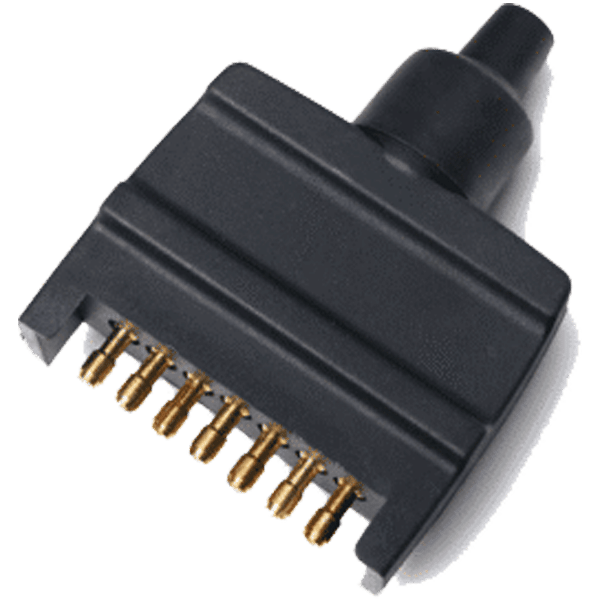
A portable solar panel is a folding panel or fabric blanket placed on the ground and plugged into the caravan through an external Anderson plug. It can be stood in full sun and aimed at it while the caravan stays in shade.
Solar blanket. Flexible fabric-backed cells with no glass. Lighter for the same wattage and rolls into a soft case. Needs propping, pegging or leaning to stand up.
Folding solar panel. Rigid glass panels on a hinged frame with built-in legs. Heavier and bulkier, but it stands up on its own and survives rough handling better.
Blankets suit travellers short on storage space. Folding panels suit travellers who want to stand it up and forget it.
Handle a blanket by its edges, do not fold it across the cells, and never drive over it. Creased or delaminated cells are where most blanket failures start.

Yes. Wire the roof array to its own controller and bring the portable panel in through an external Anderson plug. The one rule is that each source passes through exactly one regulator before it reaches the battery.
💡 Tip: fit the Anderson plug even if you only want roof solar. An external Anderson plug costs very little at build time and lets you add a portable panel later without opening the walls again. It is the cheapest future-proofing in a caravan electrical system.
Schematic wiring layout, not to scale. Each charging source passes through one regulator and its own circuit protection.
Size the array from your daily amp-hour use and your local peak sun hours. As a benchmark, one 215W panel yields roughly 726 Wh, or about 60 Ah at 12 V, on a 4.5 peak sun hour day.
Step 1. Find your peak sun hours. The Bureau of Meteorology publishes average daily solar exposure in MJ/m2. Divide by 3.6. A site averaging 16 MJ/m2 gets roughly 4.4 peak sun hours.
Step 2. Calculate panel yield. Panel watts x peak sun hours x 0.75 for heat, cable loss and angle. For a 215W panel: 215 x 4.5 x 0.75 = about 726 Wh per day, or 60 Ah at 12 V.
Step 3. Compare against your load. A 12 V compressor fridge drawing 3 A and cycling 40 per cent of the time uses about 29 Ah in 24 hours. Add lights, pump, charging, and a heater fan, and one 215W panel leaves little margin.
| Array size | Estimated daily yield at 4.5 peak sun hours | Typically suits |
|---|---|---|
| 200–215 W (one panel) |
About 700 Wh, roughly 60 Ah at 12 V | Weekenders and powered sites with occasional free camps |
| 400–430 W (two panels) |
About 1,450 Wh, roughly 120 Ah at 12 V | Most extended free-camping setups: fridge, lights, pump, heater, laptop |
| 600–645 W (three panels) |
About 2,175 Wh, roughly 180 Ah at 12 V | Full-time touring, regular inverter use, larger lithium banks |
These figures are estimates derived from the calculation above, not measured results. Winter, cloud, latitude and shading all reduce them, often sharply. Check your own appliance ratings and camping locations before committing to an array size.
Two limits decide whether the number works. The battery must be able to store the harvest, and its chemistry must accept the charge current. That is where LiFePO4 pulls ahead of AGM.
Choose MPPT for any array above a few hundred watts, for cool or low-light conditions, and for LiFePO4 charging. PWM is acceptable for a single 12 V nominal panel on a 12 V battery where cost matters most.
Victron Energy’s published comparison shows an MPPT controller harvesting 100 W where PWM took 81 W from the same panel at 25 degrees cell temperature, a difference of about 19 per cent. The same document notes the gap narrows sharply at high cell temperatures.
That matters on a hot caravan roof. The HiTech 215W module has a maximum power voltage of 17.5 V and an open-circuit voltage of 20.52 V. With one panel of that type on a 12 V battery, PWM loses less than many buyers assume in summer, though MPPT still wins in the morning, in cloud and in winter.
| Choose MPPT when | PWM may be enough when |
|---|---|
| Your array is a few hundred watts or larger | You are running a single small panel |
| You want the best return in low light and winter | Cost matters more than the last 15 per cent |
| Panels are wired in series at higher voltage | The panel is 12 V nominal on a 12 V battery |
| You are charging LiFePO4 and want profile control | The battery is AGM, and the profile is simple |
Whichever you choose, set it to the correct charge profile for your battery chemistry. A controller left on a lead-acid profile will not charge a lithium battery correctly.
Compare MPPT and PWM charge controllers at HiTech Power Solutions.
Shade hurts a series-wired array most, because the shaded panel limits the current for the whole string. Wiring panels in parallel keeps the loss contained to the shaded panel.
Bypass diodes inside each panel reduce the series loss but do not remove it. A single aerial shadow crossing one panel can cut the whole array’s output far more than the shaded area suggests.
Two responses help. Wire in parallel where the controller and cable size allow it. And position panels to avoid the shadow paths of aerials, hatches and air conditioners across the whole day, not just at noon.
Caravan and RV electrical installations are governed by AS/NZS 3001.2:2022. AS/NZS 5033, the household PV standard, explicitly excludes vehicles and does not apply.
AS/NZS 3001.2:2022, Electrical installations — Connectable electrical installations and supply arrangements, Part 2, took effect in 2023. It introduced requirements for the safe installation and storage of on-board batteries.
AS/NZS 5033:2021 excludes PV arrays on transportable structures, vehicles and boats. Those fall under AS/NZS 3001 and AS/NZS 3004 instead. Most competing articles get this wrong.
No for the 12 V side, yes for anything at 240 V. Twelve-volt solar wiring is extra-low voltage, up to 120 V ripple-free DC, and sits outside licensed electrical work.
The inverter’s 240 V output, any AC power points and the mains charger connection are licensed electrician work. Energy Safe Victoria states that unqualified electrical work is both dangerous and illegal. The 12 V side may be done by a competent owner or auto electrician, but it must still comply with AS/NZS 3001.2. Check your own state’s rules and your insurer’s position before starting.
A complete system needs nine parts: panel, charge controller, battery, roof gland, mounting hardware, Anderson plug, circuit protection, battery monitor and, if you run mains appliances, an inverter.
| Component | What it does |
|---|---|
| Monocrystalline solar panel | Generates DC power. Higher watts per square metre than polycrystalline |
| Solar charge controller | Regulates panel output and charges the battery to the right profile |
| LiFePO4 or AGM battery | Stores the harvest. Chemistry decides usable capacity and charge rate |
| Roof cable entry gland | Seals the roof penetration where cable enters the van |
| Mounting brackets or adhesive | Fixes the panel to the roof and sets how cool it runs |
| Anderson plug | External connection point for a portable panel |
| In-line fuse or DC breaker | Protects each charging source on the battery side |
| Battery monitor or shunt | Shows actual state of charge instead of a guess |
| Pure sine wave inverter | Converts 12 V DC to 240 V AC for mains appliances |
Integrated systems combine several of these in one enclosure. The POWERSYNC 3050 brings MPPT solar charging, DC-to-DC charging, inverter charging, distribution and circuit protection into one prewired unit. POWERSYNC 3680 adds a 2600W pure sine wave inverter and HiTech Connect app monitoring on Android and Apple devices.
HiTech Power Solutions is an Australian specialist in caravan, RV and off-grid electrical and electronic systems, supplying panels, controllers, lithium batteries, DC-to-DC chargers, inverters and integrated POWERSYNC power management across Australia. Talk to the team about matching a panel, controller and battery as one system.
Yes, but output drops substantially. Panels still produce in cloud and winter, just far less, because irradiance is lower and the sun sits lower in the sky. Bureau of Meteorology data shows southern Australia receiving markedly less solar exposure in June than in summer. Plan winter free camping around a larger array, a bigger battery, or a DC-to-DC charger.
Semi-flexible panels suit curved roofs and setups where weight and drilling are the main concerns. They usually have a shorter service life than rigid framed panels, because they run hotter bonded flat to the roof. Photovoltaic output falls by roughly 4.5 per cent for every 10-degree rise in cell temperature, so a panel with no air gap loses real output on a hot Australian roof.
Yes, provided the charge controller is set to a LiFePO4 charge profile. Lithium batteries accept higher charge current than AGM, so they make better use of a large array on a short winter day. Do not run a lithium battery on a controller still set for lead-acid.
Through an external Anderson plug wired back to the charging circuit. A regulated portable panel must reach the battery without passing through the roof array’s controller. An unregulated panel must reach a charge controller first, never the battery directly. Either way, the run needs its own fuse or DC breaker on the battery side.
Use a cable and lock through the frame or handle to something fixed, position the panel where you can see it from the van, and pack it away when you leave camp. Theft is the practical trade-off of portability, and it is the main reason travellers keep a roof array as well.
Yes, whenever there is daylight on the roof, though output varies with shade along the route. A DC-to-DC charger is still worth having, because it charges from the alternator at a steady rate regardless of weather and delivers far more on a wet travel day. See chargers and inverters at HiTech Power Solutions.


$255.75 Original price was: $255.75.$190.94Current price is: $190.94. + GST


$220.08 + GST


$211.65 Original price was: $211.65.$169.32Current price is: $169.32. + GST
Fill out the form below, and we’ll get back to you as soon as possible.
Dear Valued Customer,
We will be closed for operations from 19 December to 29 December.
All orders placed between 19 December and 29 December will be processed and delivered after 29 December.
Our technical team, communications team, and customer support will also resume contact after 29 December.
Wishing you a Merry Christmas and a Happy New Year!